
All are invited to join us for EHS’s Connecticut History Book Club. Offered in collaboration with Ivoryton Library, EHS hosts this quarterly book club to explore the state's past through both fiction and non-fiction works, highlighting key events, figures, and themes that shaped the state or played a larger role in America’s history. We will focus on works that illuminate the bring marginalized stories to the forefront, offering a deeper understanding of Connecticut's diverse history. Join us for insightful discussions that connect the past to the present, revealing the histories that shaped our state.
Please join us at Hills Academy (22 Prospect Street-parking and entrance in rear) for a book discussion lead by EHS Director, Melissa Josefiak. This event is FREE and lite refreshments will be provided. Register below!
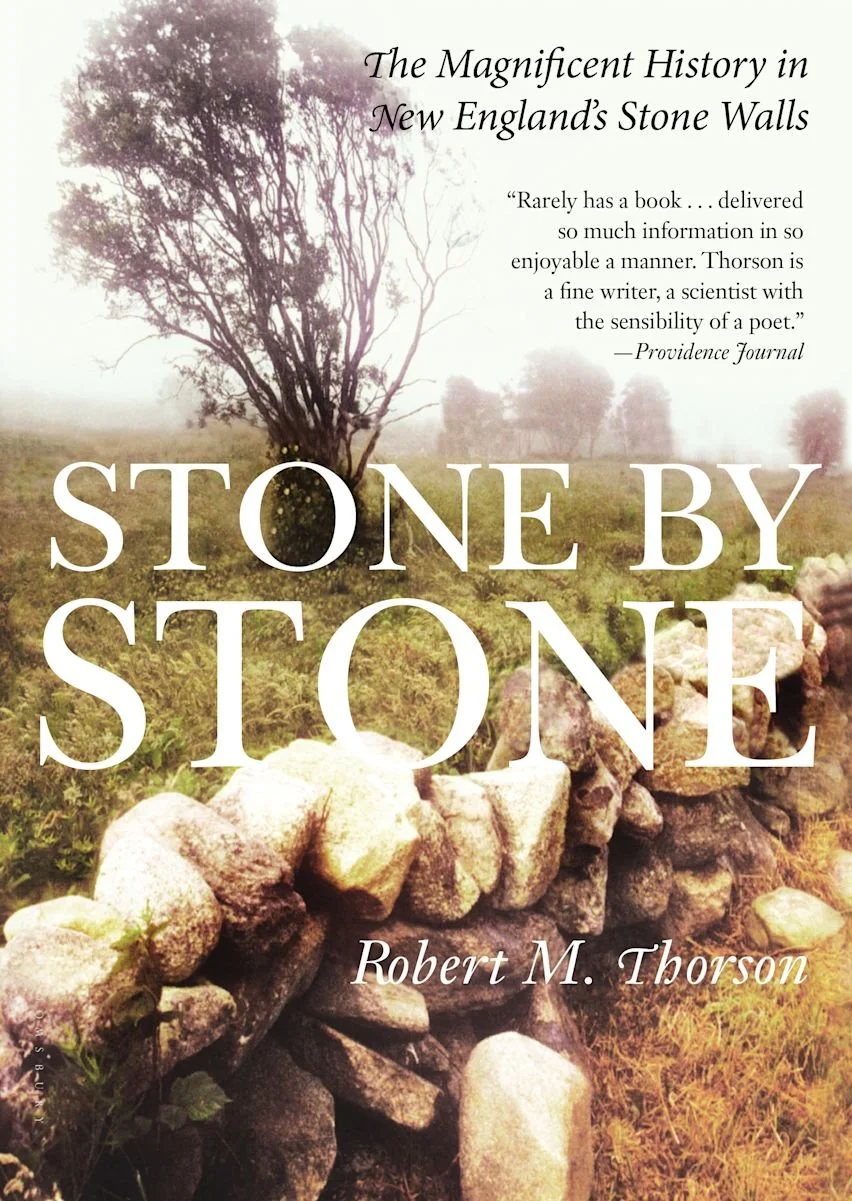
For August’s meeting we are reading Stone by Stone by Dr. Robert Thorson.
Book Bio from Bloomsbury:
“There once may have been 250,000 miles of stone walls in America's Northeast, stretching farther than the distance to the moon. They took three billion man-hours to build. And even though most are crumbling today, they contain a magnificent scientific and cultural story-about the geothermal forces that formed their stones, the tectonic movements that brought them to the surface, the glacial tide that broke them apart, the earth that held them for so long, and about the humans who built them.
Stone walls tell nothing less than the story of how New England was formed, and in Robert Thorson's hands they live and breathe. "The stone wall is the key that links the natural history and human history of New England," Thorson writes. Millions of years ago, New England's stones belonged to ancient mountains thrust up by prehistoric collisions between continents. During the Ice Age, pieces were cleaved off by glaciers and deposited-often hundreds of miles away-when the glaciers melted. Buried again over centuries by forest and soil buildup, the stones gradually worked their way back to the surface, only to become impediments to the farmers cultivating the land in the eighteenth century, who piled them into "linear landfills," a place to hold the stones. Usually the biggest investment on a farm, often exceeding that of the land and buildings combined, stone walls became a defining element of the Northeast's landscape, and a symbol of the shift to an agricultural economy.
Stone walls layer time like Russian dolls, their smallest elements reflecting the longest spans, and Thorson urges us to study them, for each stone has its own story. Linking geological history to the early American experience, Stone by Stone presents a fascinating picture of the land the Pilgrims settled, allowing us to see and understand it with new eyes.”