
Anathema Coffee House
By Danny Atkinson
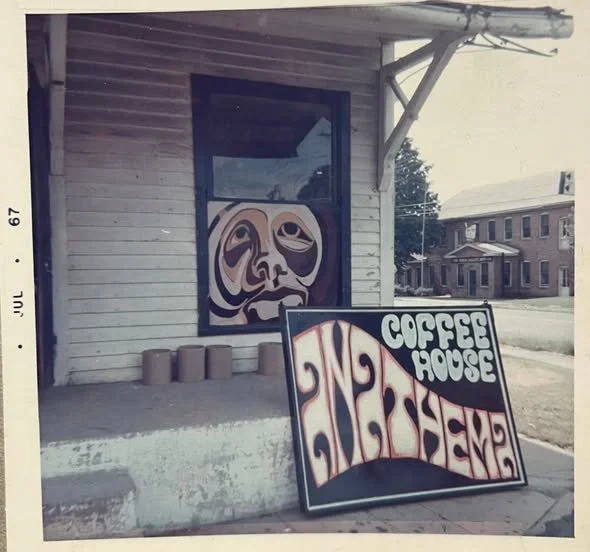
Anathema Coffee Shop in Centerbrook was open for only 14 months during summers of 1967 and ’68. However, Anathema’s impact on young people in Essex and surrounding communities lasted much longer. Anathema Coffee Shop acted as a secluded space where this age group could hang out and engage in the activities and entertainment they enjoyed. What made Anathema particularly unique was that it was largely conceived and built by these young adults.
Anathema was the brainchild of teenagers participating in local summer recreation programs and youth groups at First Congregational Church and St. John’s Episcopal Church in Essex. It was officially started by the Pilgrim Fellowship Group, which consisted of members of both churches. The idea for the coffee shop was conceived over the course of two to three years.
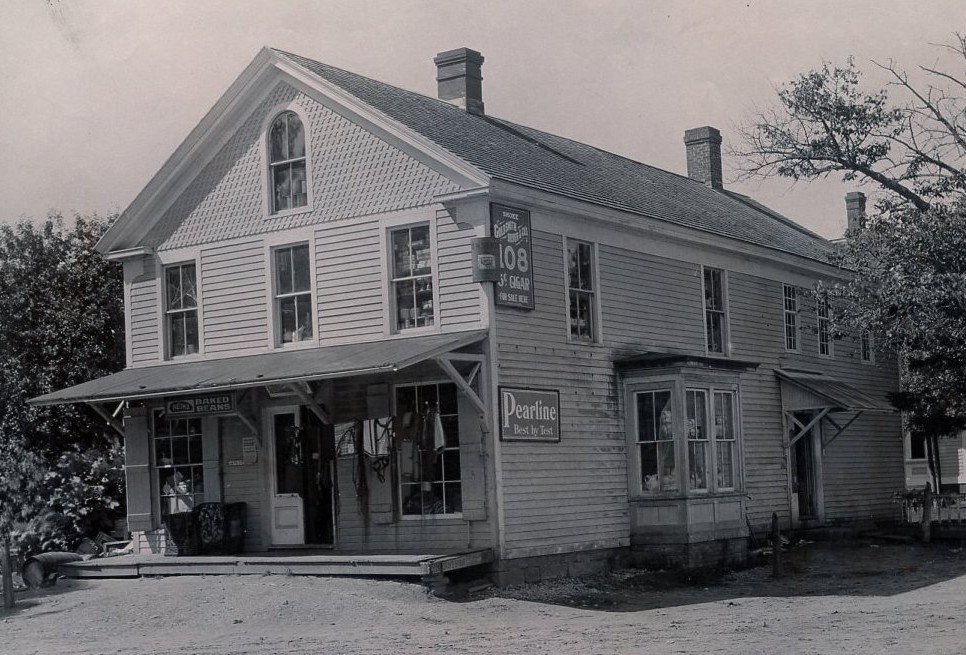
It was eventually determined that Anathema would open in June 1967 at the location of the old Centerbrook Store (formerly Spencer’s Store), at the intersection of Westbrook Road and Main Street. The location was originally rented on a six-month basis. The funds used to open Anathema were largely raised by concerts hosted at Essex Boat Works, and it was sponsored by multiple churches.
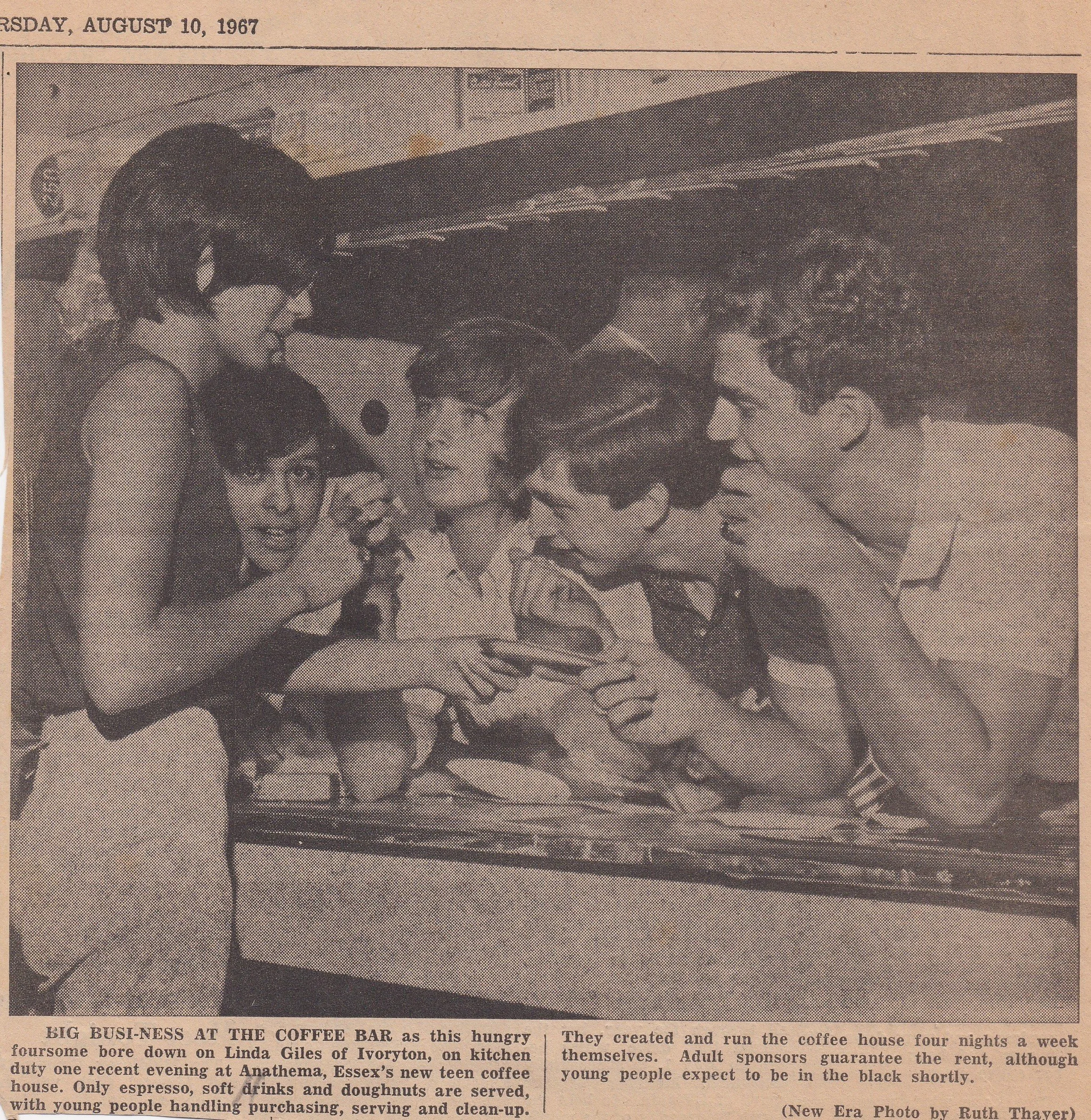
In addition to originating the idea for Anathema Coffee Shop, the young people did most of the physical work on the building, particularly the remodeling of its interior. Up to 30 people of all ages worked on preparing Anathema for its grand opening, including non-Essex residents. All the building equipment was either donated or scrounged from a variety of locations, including the town dump. Paints were donated by local hardware stores, and adults also helped with repairing the building as well as electrical work.
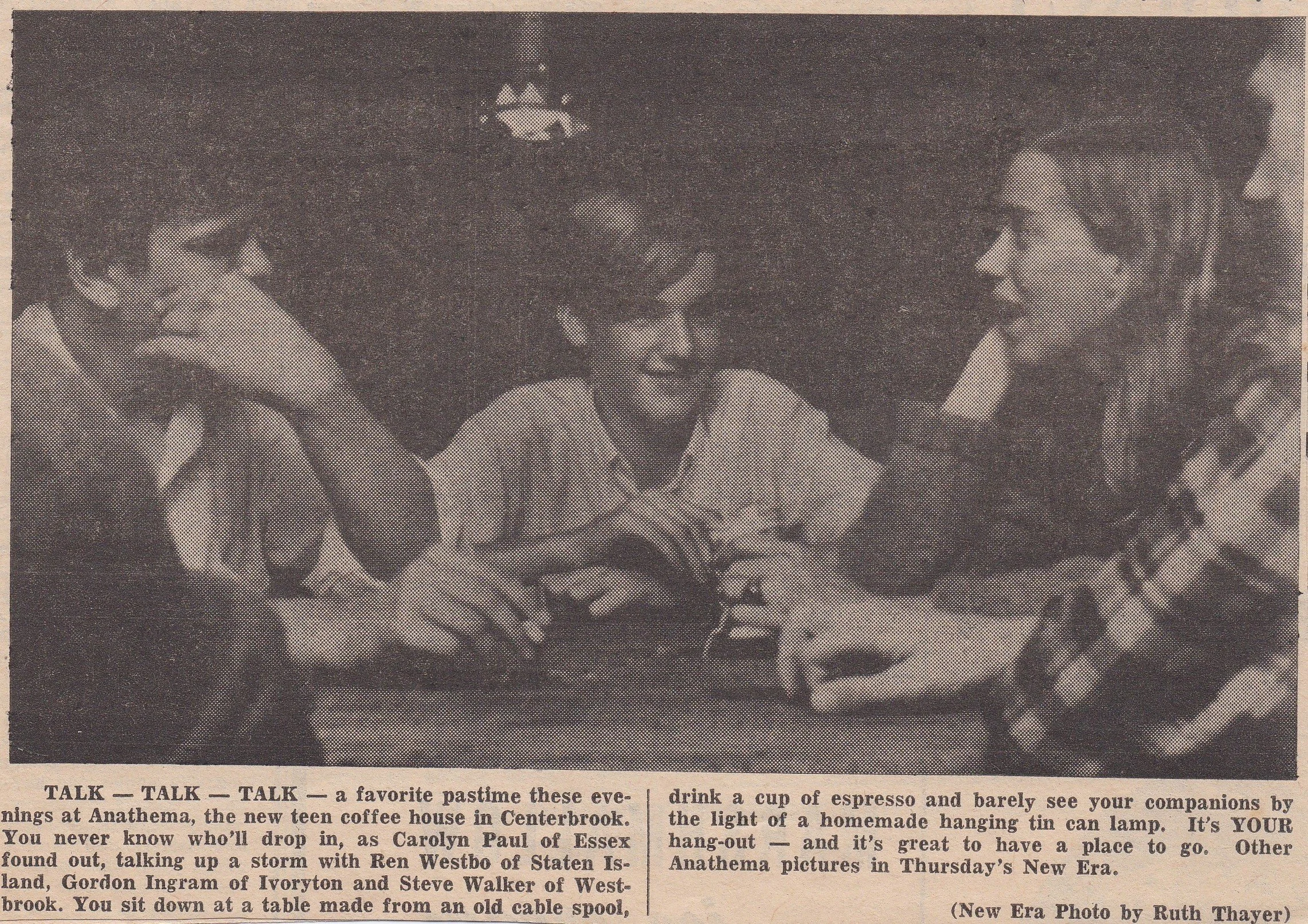
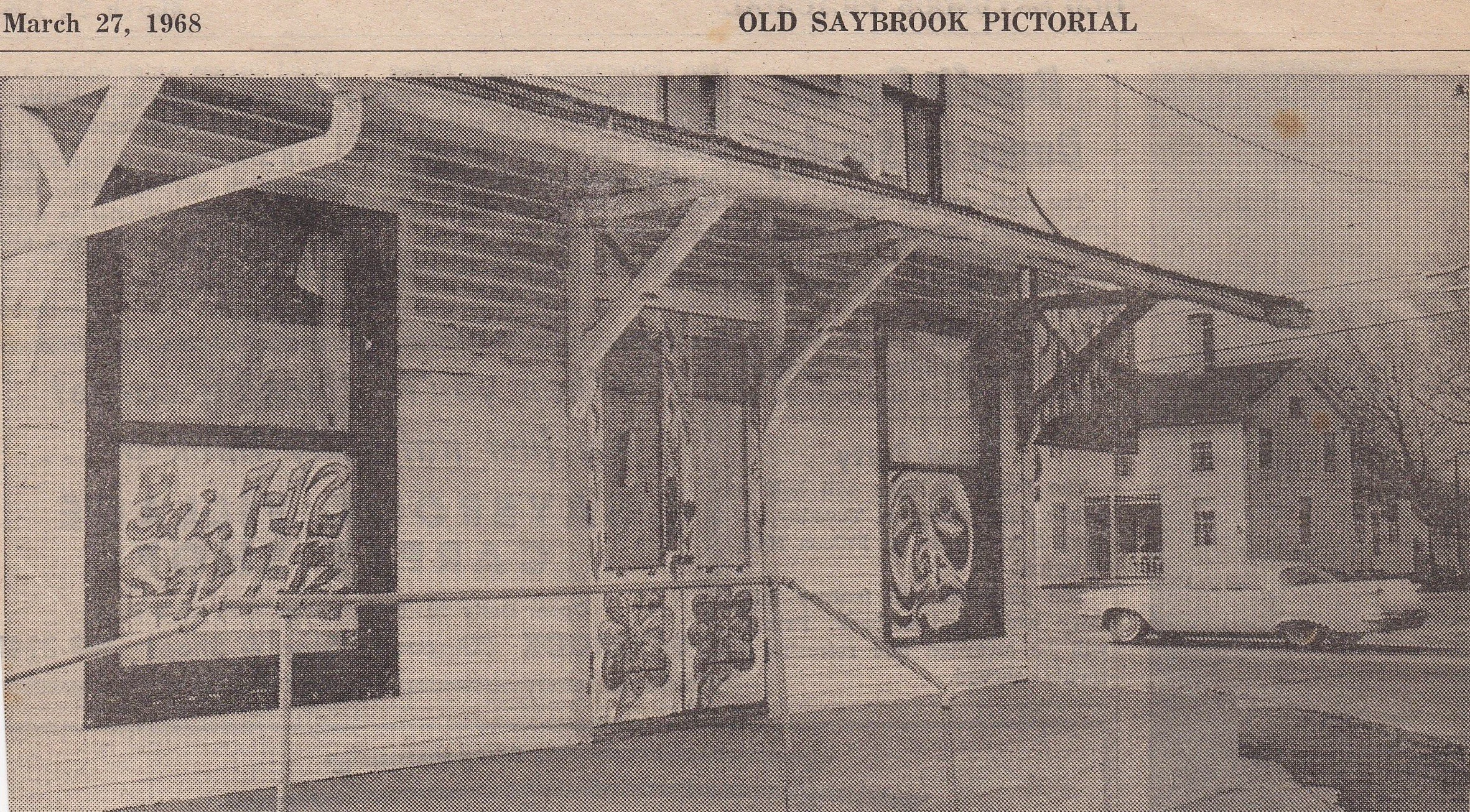
The young people who worked on redesigning Anathema before its opening continuously demonstrated creativity during this process. For example, they helped create lights out of tin cans and painted intricate designs on them and covered the walls in bright patterns and murals in a pop art style, which they designed themselves.
In addition to clergy at First Congregational and St. John’s and various adults, Jay Libby and Jill Harris were essential in ensuring that Anathema was both physically and fiscally ready to open that June. Harris helped book musical acts and other entertainment events when Anathema first opened.
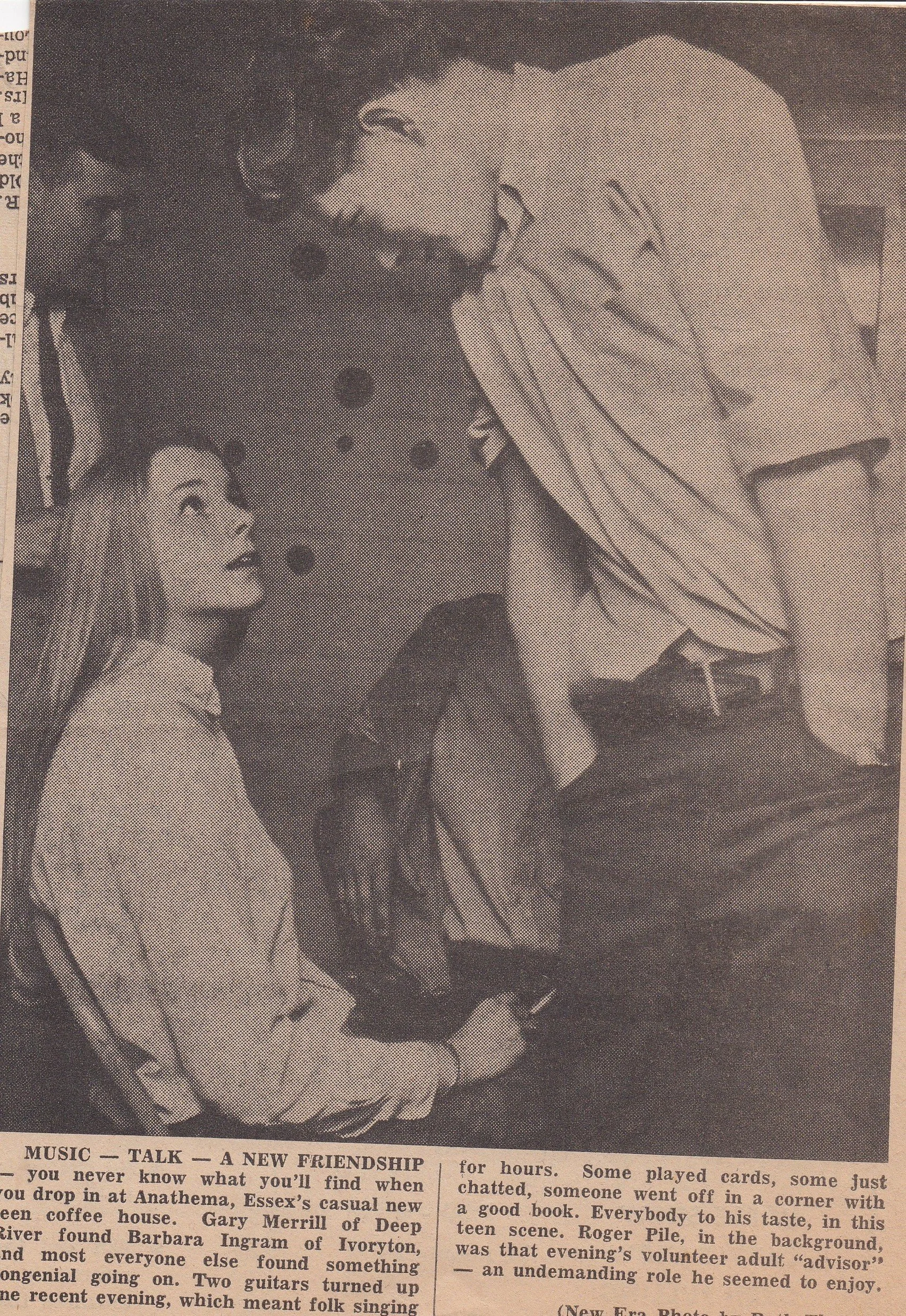
Under present Phillip Plumb, Anathema Coffee Shop was initially successful. It attracted a loyal audience of young people from throughout the area who were looking for a fun business they could call their own. In addition to hosting musicians (mostly folk singers) at least one night per week, Anathema hosted readings of poetry and short stories, and eventually screenings of films and plays. There were additional activities attendees could participate in like playing cards. At the outset, the coffee shop hosted up to sixty people per night.
In its opening months, Anathema was open four nights per week and 7-12 on weekends. It offered donuts, coffee, soda and additional baked goods and refreshments. In addition to being the customer base, young people mostly ran the coffee shop themselves and performed customer service, serving, and cleaning duties in addition to other tasks. There were volunteer adult advisors at Anathema each night, and adult sponsors guaranteed the rent.
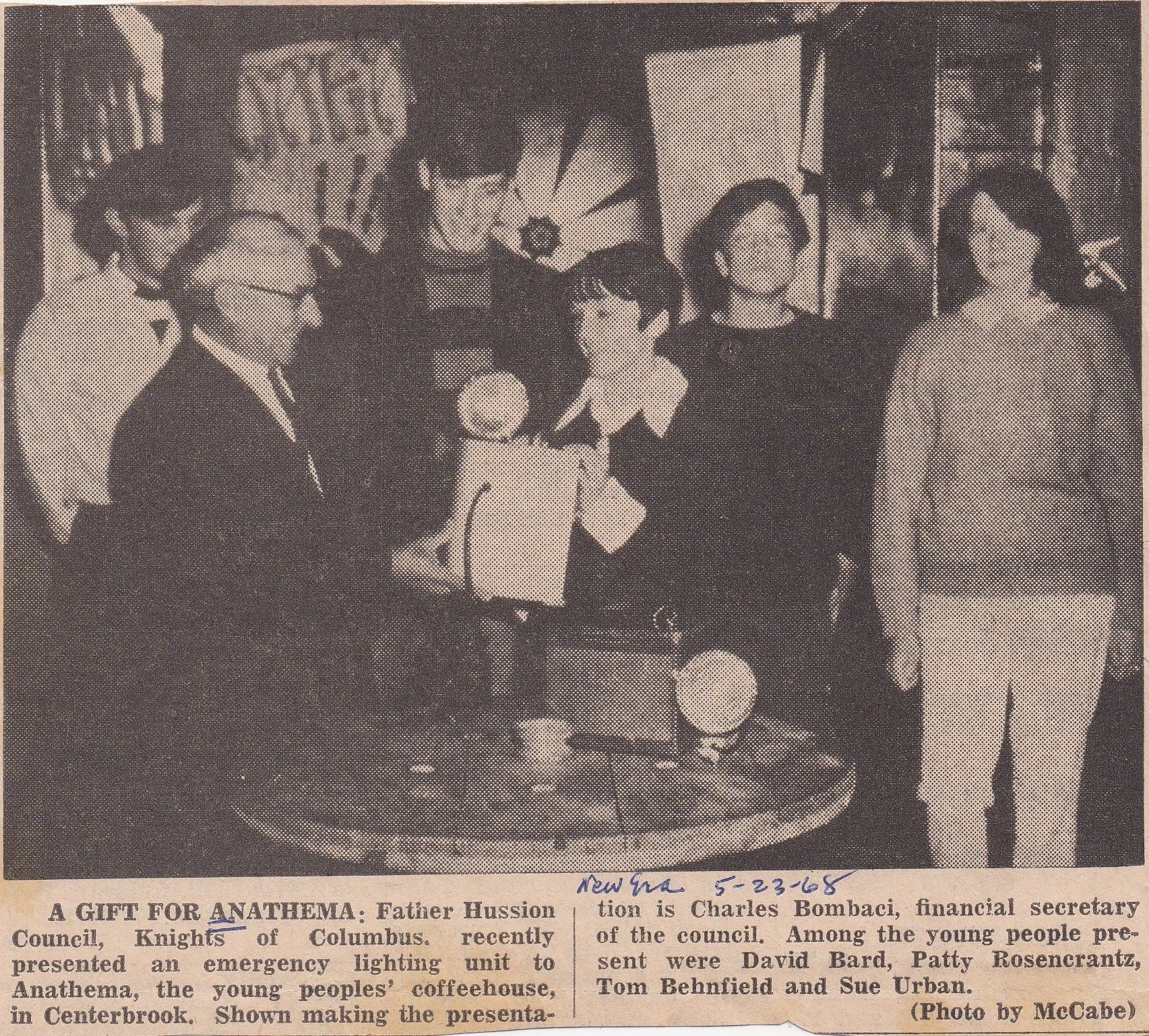
As president, Plumb was assisted in managing Anathema by an advisory board of Donald Male, Mr. and Mrs. Robert Herst of Essex, and Reverends Peter Diehl and Kenneth Thomas, who preached at First Congregational and St. John’s Episcopal, respectively.
Anathema hosted an eclectic group of musicians, with Alan Gleeson of Madison being the most frequent performer. The topics of both original and cover songs varied widely, with examples being love and virtue in the modern world. During poetry readings, performers read pieces by luminaries like T.S. Elliott and Allen Ginsburg as well as their original work.
Despite consistently attracting customers and not having any disturbances or similar incidents in its opening months of operation, Anathema faced some opposition from adults in Essex. Newspaper articles and columns indicate that this group did not like the coffee shop’s design, particularly the psychedelic window paintings, the lack of rules banning smoking or limiting the amount of time teenagers could stay at Anathema and generally associated the coffee shop with the hippie movement and other countercultural activities.
Due to this opposition and other various reasons, Anathema struggled to attract adults to serve as advisors. First Selectman Richard Battey was a vocal supporter of Anathema against naysayers and said in the media that it had kept young people out of trouble and not had any negative effects on Essex.
Anathema regularly held tag sales throughout 1967 to assist with its operating costs. Items that were sold included antiques, household items, and sports equipment.
After attracting a solid customer base and doing OK financially in its first few months, Anathema Coffee House began to struggle at both ends after the calendar changed to 1968. Its attendance went down significantly during the winter and Anathema’s financial troubles became serious enough that it faced the threat of bankruptcy. In March, some 40 teenagers contributed funds to help pay rent.
A few different reasons were provided in newspaper articles for why attendance at Anathema Coffee Shop suddenly went down. These included parental opposition, the opening of dance halls in Old Saybrook, and the novelty of the coffee house wearing thin. Anathema also struggled with a lack of interest from its original young organizers, some of whom had recently moved away from the area. In addition, administrators at Valley Regional High School fought efforts to publicize Anathema because it was not a school-sponsored activity.
Plumb, the advisory board and the young people actively involved in running Anathema did their best to raise funds and pay for expenses throughout 1968 by holding events such as multiple sponsored dances. However, they continuously had difficulty paying the monthly rent of $100 along with utilities, which brought monthly costs up to roughly $175.
To meet these expenses and increase attendance at Anathema Coffee Shop, Plumb pursued a few different ideas. He had discussions with the afore-mentioned parties and other leaders in the community about hosting speakers and other group discussions, but Anathema did not add these events to its regular schedule. There was also discussion about using the shop’s basement as a small movie theater and or adding a ping-pong table, but neither idea ever came to fruition.
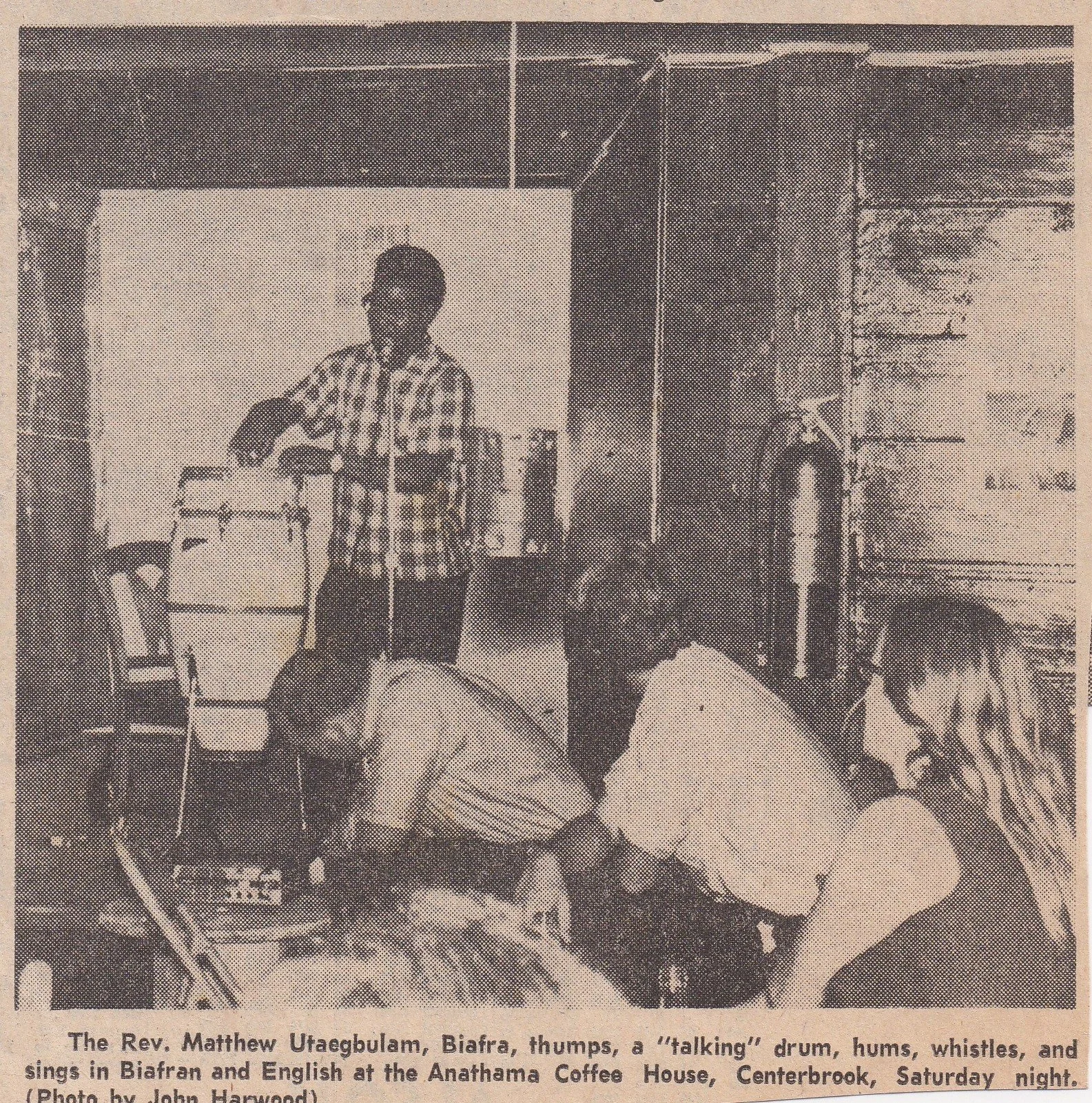
As the financial troubles got worse, Plumb went all out to bring in a crowd. First, Anathema presented a homemade film and then the verse play Spoon River Anthology by Lee Masters, which was performed by a drama class from Incarnation Camp. Both events were well received but did not attract huge crowds. Finally, Anathema hosted a fascinating and emotional musical performance and talk from Rev. Matthew Utaegbulam, who preached at St. John’s Episcopal Church and was known as Father Matthew. This event drew a crowd of mostly adults, which Plumb said he couldn’t explain.
Utaegbulam, who was from Biafra (a short-lived republic that succeeded from Nigeria and existed from 1967-70 during the Nigerian Civil War) and served as a missionary in Nigeria before fleeing fighting and persecution, sang and drummed both African and American songs on an African-style drum. In addition to his music, Father Matthew discussed the savagery of the war between Nigeria and Biafra through his personal experiences and answered questions about how his family and friends were living through it.
After much discussion by Anathema Coffee Shop’s leaders and sponsors and unsuccessful efforts to increase attendance, it was decided to close Anathema at the beginning of September 1968. Up to closing, there was a regular crowd of roughly 15 teenagers who argued that the coffee shop was worth continuing.
Plumb and members of the advisory team largely refrained from discussing why Anathema closed, although Diehl admitted running the coffee shop was too much effort for the number of regular attendees it drew. However, they refused to call Anathema’s closing a failure. Instead, they showed appreciation for being involved with the coffee shop and believed that it had a positive effect on Essex overall and especially the young people who started and worked at Anathema. Battey, always an advocate, said in an issue of The New Era that Anathema Coffee Shop “was a good example of kids chipping in to do something themselves”.
All parties involved with Anathema were looking forward to opening a similar business in Essex the following summer. In addition to possibly opening a coffee shop at a different location in town that was geared towards customers of all ages, other ideas discussed included a commercial establishment that would attract moviegoers and boaters located around the docks on Main Street. Plumb said that he would ensure he had young people heavily involved with and employed by any such business.
While there is no history of such a business opening the following summer, a small teen center was set up in Town Hall the next August for an undisclosed amount of time as part of community programming that was geared towards teenagers.
In The New Era, Male ultimately summed up how the Anathema Coffee Shop brought the people of Essex together and made a positive impact on the young people who helped create and run the business. After quoting an elementary high school principal who said attending Anathema made him feel the closest he’s been to teenagers in a decade, Male said, “They all grew tremendously during the past year, and are now ready to go on to something bigger and better.”
EHS Facebook post re: Spencer’s Store and Anathema Coffee Shop
March 11, 2022
Yes, EHS offered you a very easy “Find It Friday” – the Anathema Coffee House (1967) once occupied the Spencer’s Store building in Centerbrook, now Spencer’s Lofts. “Friday” has addressed the store’s older history before: a store on this site by 1817, then operated as a general mercantile and feed store by the Spencer family from the 1860s into the 1960s, then it developed into a series of community spaces. Bobo Lavorgna submitted the photo for “Find It Friday” with the highlights of the building’s last 20 years: “My uncle, Don Male, was the Youth Pilgrim Fellowship leader at the Essex Congregational Church in the 60’s. The fellowship opened the coffeehouse as a gathering place for teenagers. Don painted the sign. He was the art teacher for the Essex/Chester/Deep River elementary schools back then. Brian Ebin Parker Wolfe of Westbrook had a band that used to play there.” EHS loves learning about 20th century, too – thank you, Bobo! Thanks for playing “Find It Friday!”